
Keeping up with my promise to release regularly, I want to write a quick simple note here on the topic at hand. The inspiration behind creating this blog was to create a forum where by my regular thoughts on the culture could be presented, and also as a sort of tribute to the art form; an expressive musical form that has shaped the subtleties of my character.
Soon I will be compiling a list of the top hip hop sites on the web today, which will be a part of a larger project of forming a collective on the best contributions to date. The notion that 'hip-hop is dead' or has nothing else to give is something that every fan, artist, friend of hip-hop should take seriously. Here's an article I found that sheds good light. Smith gives tribute. Stay tuned for this.
-Nat
Sunday, February 17, 2008

Sunday, February 10, 2008
Rhapsody [Volume 1.0 - Issue 5.0 ]
Rhap.so.dy [rap-suh-dee]-noun : A usually instrumental composition of irregular form that often incorporates improvisation.
The day my son was born, an overwhelming spirit of change had overcome me. He was 7 pounds and 1 ounce of anticipation, his imposing pecan-shaped eyes tearing up, looking to me for comfort. I'd just turned 24 years old, and welcomed parenthood like an agrarian welcomes the spring season. Our seeds had been 'spontaneously' sown, in a time when our atmosphere was filled with highly contrasting moods, color and tonality. Yet despite our lack of exposure to the air of parenthood, we were invested in our measure of clairvoyance. We knew that our free form style of parenting was usually thought upon with skepticism (free form because our finances were unpredictable, and our housing situation was still undetermined). We also knew that the improvisation meant that we could likely less afford to be choosy.
Four years later, my young one has grown. Motherhood is still a matter of balancing moods, managing your personal passions versus your professional passions and being honest about the choices you make or have made and how they define your life in the long run. Though at times it's difficult to make decisions, us growing as effective parents, are like emerging, creatively driven artist recording their first record, their raw deliverance and devotion emptying out into a product of the varied pulse of their hearts words.
Those early intro to industry feelings that we can genuinely feel in works like Illmatic(Nas), Reasonable Doubt(Jay-Z), Enter the Wu-tang (Wu-tang Clan), seem to fade as we enter the first decade of the 21st century. As of lately my feelings of hip-hop have been distant, speaking honestly. For you to thoroughly understand my POV I'd have to tell you first my personal feelings on hip-hop for the decade that is just behind us.
Here is a list of the past hit singles from the billboard charts from 1998 - 2005:
#1) 1998 Lauryn Hill, Miseducation
#1) 1999 Juvenile, 400 Degreez
#1) 2001 Dr Dre 2001
#1) 2002 RKelly TP2
#1) 2003 50 Cent, Get Rich or Die Tryin
#1) 2004 Usher, Confessions
#1) 2005 50 cent, The Massacre
Hip-Hop has always been familiar geography for me. Street Talk, Hard Beats, mental struggle, financial struggle and the extreme materialism that illusions much of my goals as a youth growing up. For inner city youth such as myself, material things become representative of a coming into being, having status or finally being recognized. It says look at me and look at what I've accomplished. It's a reactive mentality that youth become used to, namely myself at one point in time.
There is also my relationship with minority men, and how they feel towards women. There was a time when I felt that listening to hip-hop made me understand closer the voice of minority men, my interest there being relationships with black or latino men. Successful rappers claim their bragging rights for what they've achieved. Their are key human interest perspectives here. Men, that are doing well for themselves, even thought they are not the best looking guys, they've gained popularity with money, charisma, and not being afraid to say how they feel.
The combative part of hip hop has a mass appeal that cannot be denied. What we call battle rhymes, where two artist go verbally head to head in a verbal war for who is the better freestyle or written artist. We’ve seen Nas and Jayz fight for the crown. We see it in politics everyday, the top candidates expressing what they feel they represent and why they are a better choice to stand at the head of our nation. Hip hop can be considered a microcosm of this system. May the most articulate slanderer win.
There is also the Afro-Caribbean rhythm, and flow of tracks that speak to me personally (and a lot of young people from what I've seen) on an emotional level. In my experience, many people don't listen to lyrics of hip-hop up front but first the tempo, and poetic timing that has become a defining character of the art form, and it becomes sticky. Many times listeners are appealed to by the sound first, the melody, the drums, how it persuades them to move. Next they look at the lyrics and whether it relates to them. What I listen to and what’s in my ipod is a mixture of genres / sounds. What makes up my hip hop collection is a series of old and new works that comprise sounds that uplift, or that illustrate the nitty gritty of the youth that I am familiar with. The streets of harlem. Dark and sometimes lonely, these streets clearly draw the experience of being in the minority. The experience of feeling a sense of self-restriction that does not afford the personal freedoms that we very often search for. Some of my favorites are, Common, Nas, Lauryn hill, Kanye west. Artists that represent hip hop as an art form, as an expression of hope, an expression of creativity and change.
I went to a concert of Lauryn Hill's at the garden in 1999. The performance was, of a magnitude that I haven’t been able to express about artists I listen to since then. The reason why is because her delivery was brilliant in many ways. The performance had elements of old school and new school, DJs on the ones and two’s (New School) versus Lauryn and her band(Old School). It was truly brilliant. Why I love hip hop is because it has the potential to be everything that music can and should represent. Passion, struggle, overcoming adversity, expression of human truths and experience.
Here we are today in 2008 Grammy's for best rap album, the most celebrated music award ceremony of our nation ... And the winner is ...
Kanye West, Graduation (Great Album).
Now there's this awkward number with Kid Rock and older women who's name I didn't quite get...
The day my son was born, an overwhelming spirit of change had overcome me. He was 7 pounds and 1 ounce of anticipation, his imposing pecan-shaped eyes tearing up, looking to me for comfort. I'd just turned 24 years old, and welcomed parenthood like an agrarian welcomes the spring season. Our seeds had been 'spontaneously' sown, in a time when our atmosphere was filled with highly contrasting moods, color and tonality. Yet despite our lack of exposure to the air of parenthood, we were invested in our measure of clairvoyance. We knew that our free form style of parenting was usually thought upon with skepticism (free form because our finances were unpredictable, and our housing situation was still undetermined). We also knew that the improvisation meant that we could likely less afford to be choosy.
Four years later, my young one has grown. Motherhood is still a matter of balancing moods, managing your personal passions versus your professional passions and being honest about the choices you make or have made and how they define your life in the long run. Though at times it's difficult to make decisions, us growing as effective parents, are like emerging, creatively driven artist recording their first record, their raw deliverance and devotion emptying out into a product of the varied pulse of their hearts words.
Those early intro to industry feelings that we can genuinely feel in works like Illmatic(Nas), Reasonable Doubt(Jay-Z), Enter the Wu-tang (Wu-tang Clan), seem to fade as we enter the first decade of the 21st century. As of lately my feelings of hip-hop have been distant, speaking honestly. For you to thoroughly understand my POV I'd have to tell you first my personal feelings on hip-hop for the decade that is just behind us.
Here is a list of the past hit singles from the billboard charts from 1998 - 2005:
#1) 1998 Lauryn Hill, Miseducation
#1) 1999 Juvenile, 400 Degreez
#1) 2001 Dr Dre 2001
#1) 2002 RKelly TP2
#1) 2003 50 Cent, Get Rich or Die Tryin
#1) 2004 Usher, Confessions
#1) 2005 50 cent, The Massacre
Hip-Hop has always been familiar geography for me. Street Talk, Hard Beats, mental struggle, financial struggle and the extreme materialism that illusions much of my goals as a youth growing up. For inner city youth such as myself, material things become representative of a coming into being, having status or finally being recognized. It says look at me and look at what I've accomplished. It's a reactive mentality that youth become used to, namely myself at one point in time.
There is also my relationship with minority men, and how they feel towards women. There was a time when I felt that listening to hip-hop made me understand closer the voice of minority men, my interest there being relationships with black or latino men. Successful rappers claim their bragging rights for what they've achieved. Their are key human interest perspectives here. Men, that are doing well for themselves, even thought they are not the best looking guys, they've gained popularity with money, charisma, and not being afraid to say how they feel.
The combative part of hip hop has a mass appeal that cannot be denied. What we call battle rhymes, where two artist go verbally head to head in a verbal war for who is the better freestyle or written artist. We’ve seen Nas and Jayz fight for the crown. We see it in politics everyday, the top candidates expressing what they feel they represent and why they are a better choice to stand at the head of our nation. Hip hop can be considered a microcosm of this system. May the most articulate slanderer win.
There is also the Afro-Caribbean rhythm, and flow of tracks that speak to me personally (and a lot of young people from what I've seen) on an emotional level. In my experience, many people don't listen to lyrics of hip-hop up front but first the tempo, and poetic timing that has become a defining character of the art form, and it becomes sticky. Many times listeners are appealed to by the sound first, the melody, the drums, how it persuades them to move. Next they look at the lyrics and whether it relates to them. What I listen to and what’s in my ipod is a mixture of genres / sounds. What makes up my hip hop collection is a series of old and new works that comprise sounds that uplift, or that illustrate the nitty gritty of the youth that I am familiar with. The streets of harlem. Dark and sometimes lonely, these streets clearly draw the experience of being in the minority. The experience of feeling a sense of self-restriction that does not afford the personal freedoms that we very often search for. Some of my favorites are, Common, Nas, Lauryn hill, Kanye west. Artists that represent hip hop as an art form, as an expression of hope, an expression of creativity and change.
I went to a concert of Lauryn Hill's at the garden in 1999. The performance was, of a magnitude that I haven’t been able to express about artists I listen to since then. The reason why is because her delivery was brilliant in many ways. The performance had elements of old school and new school, DJs on the ones and two’s (New School) versus Lauryn and her band(Old School). It was truly brilliant. Why I love hip hop is because it has the potential to be everything that music can and should represent. Passion, struggle, overcoming adversity, expression of human truths and experience.
Here we are today in 2008 Grammy's for best rap album, the most celebrated music award ceremony of our nation ... And the winner is ...
Kanye West, Graduation (Great Album).
Now there's this awkward number with Kid Rock and older women who's name I didn't quite get...
Sunday, February 3, 2008
Songs that make the whole world sing ...
I've always been fascinated by the human dynamic involved in the makings of epidemics. A group of individuals or an individual uses a snappy word or phrase, wears an article of clothing, or makes a memorable gesture and turns something ordinary into an intense trend where it's consumption is infectious. ( See Malcolm Gladwell's 'The Tipping Point' ).
Much of the music industry base their business philosophy's or strategies on predicting trends or a calculated effort in lighting the spark that may catch fire and become rampantly spread. It happened with golds chains and flat tops in the 80s, then baggy clothes and bling in the late 90's and in the 21st century 20+ inch tire rims became a must have. Politicians tie phrases to their campaigns in the hopes that voters are drawn to the words and repeat them.
I say this because I feel it is important to acknowledge that music in itself is highly epidemic in nature. Hip-hop artists are among the most influential personalities of the world. This influence attributes to an immense power. The power to reach so many people at once, for the length of about 3-6 minutes.
I've admitted that I allow my son to listen to hip-hop understanding the power that it has to influence his mind. Nevertheless, the truth is I do a considerable amount of filtering, on a song by song basis judging on whether certain records tone or content exudes a certain level of negativity.
Like any art form that uses subjective forms of expression and is open to many opinions, I choose not to ignore the contribution that this music form offers as a pandemic culture.
http://hiphopgalaxy.com/blogs/spatemag/2008/02/02/news-kanye-west-50-cent-and-snoop-get-painted/
Much of the music industry base their business philosophy's or strategies on predicting trends or a calculated effort in lighting the spark that may catch fire and become rampantly spread. It happened with golds chains and flat tops in the 80s, then baggy clothes and bling in the late 90's and in the 21st century 20+ inch tire rims became a must have. Politicians tie phrases to their campaigns in the hopes that voters are drawn to the words and repeat them.
I say this because I feel it is important to acknowledge that music in itself is highly epidemic in nature. Hip-hop artists are among the most influential personalities of the world. This influence attributes to an immense power. The power to reach so many people at once, for the length of about 3-6 minutes.
I've admitted that I allow my son to listen to hip-hop understanding the power that it has to influence his mind. Nevertheless, the truth is I do a considerable amount of filtering, on a song by song basis judging on whether certain records tone or content exudes a certain level of negativity.
Like any art form that uses subjective forms of expression and is open to many opinions, I choose not to ignore the contribution that this music form offers as a pandemic culture.
http://hiphopgalaxy.com/blogs/spatemag/2008/02/02/news-kanye-west-50-cent-and-snoop-get-painted/
Monday, January 28, 2008
A change that we can believe in ...
Senator Barack Obama's campaign slogan goes: "A change that we can believe in". For every politician, change is like a loaded super soaker, being pumped and pumped then sprayed with a watered message as far as it can reach.
The late Tupac Amaru Shakur once spoke of change in a single released 1998.
"And still I see no changes. Can't a brother get a little peace?
There's war on the streets & the war in the Middle East. Instead of war on poverty, they got a war on drugs so the police can bother me."
Naseer Jones, poetic lyricist, spoke of the need for change in his recent well received single titled "Hip-Hop is dead".
"Everybody sound the same, commercialize the game
Reminiscin' when it wasn't all business
If it got where it started
So we all gather here for the dearly departed"
These influential figureheads say the word change (or make reference to it) and we stop, look and listen, inspired and empowered, because we believe that these men are forces for progress or movement.
But what does change mean for the status quo of hip-hop? Does it mean censorship of artists like 50 cent, Nelly or Lil Wayne? Does it mean stronger combat among artists on what constitutes true hip-hop, real lyricists vs fake thugs? Does it mean coercing rappers to acknowledge and act on their responsibility to youth.
What do we believe in where hip-hop is concerned? Do we believe in pure unadulterated story telling where tales of the streets, and 'the drug game' offer life and death accounts of the dark society we can relate to?
Do our convictions lie in the charismatic energy, sex, and harmony that hip-hop delivers? Or is it humility of spirit, integrity and heart that drive us?
Hip-hop is like a government, with divided wings of constituents that promote separate ideals for its conveyance. What's your vote gonna be?
-N
The late Tupac Amaru Shakur once spoke of change in a single released 1998.
"And still I see no changes. Can't a brother get a little peace?
There's war on the streets & the war in the Middle East. Instead of war on poverty, they got a war on drugs so the police can bother me."
Naseer Jones, poetic lyricist, spoke of the need for change in his recent well received single titled "Hip-Hop is dead".
"Everybody sound the same, commercialize the game
Reminiscin' when it wasn't all business
If it got where it started
So we all gather here for the dearly departed"
These influential figureheads say the word change (or make reference to it) and we stop, look and listen, inspired and empowered, because we believe that these men are forces for progress or movement.
But what does change mean for the status quo of hip-hop? Does it mean censorship of artists like 50 cent, Nelly or Lil Wayne? Does it mean stronger combat among artists on what constitutes true hip-hop, real lyricists vs fake thugs? Does it mean coercing rappers to acknowledge and act on their responsibility to youth.
What do we believe in where hip-hop is concerned? Do we believe in pure unadulterated story telling where tales of the streets, and 'the drug game' offer life and death accounts of the dark society we can relate to?
Do our convictions lie in the charismatic energy, sex, and harmony that hip-hop delivers? Or is it humility of spirit, integrity and heart that drive us?
Hip-hop is like a government, with divided wings of constituents that promote separate ideals for its conveyance. What's your vote gonna be?
-N
Sunday, January 20, 2008
The best of times, the worst of times [Volume 1.0 - Issue 2.0]

Nasir Jones seemingly prophetic message "Hip Hop is dead" may be shaping form yet, according to a number of media sources See 'Hip Hop's Down Beat'. It is believed the music industry is on a downward trend overall and hip-hop is sliding along a steep slope with the genre experiencing reportedly a one-third drop on it's sales in '07. Indie Record Labels are being scouted in bigger numbers, with some rappers even taking a groundswell approach (See 'The Shrinking Market Is Changing the Face of Hip-Hop'.), taking it to the people; reminiscent of the days when 'mixtapes' were the main channel for the hottest joints of the season. Media critics attribute this decline to critical listeners who point unforgiving fingers towards vulgarities, and violent content for the abandonment of revenue, while others name the flooding of formulaic sound, that has usual buyers overexposed and 'under-stimulated'. This puts the genre at the brink of a definitive direction, and at a position to take in some good with some bad. While hip-hop's exposure and popularity has reached the broadest height's of it's lifetime with something like 70% of it's buyers of the caucasion persuasion, it's persona is under intense scrutiny, that of which puts it at a cross roads, and has 'break masters', producer extraordinaries, or image weavers, deep diving through the sea of their imaginations.
Yesterday a friend told me I didn't appear, to her, to be a recognizable member of the hip-hop fanbase. "You don't strike me as a hip-hop fan" she said, and I began to ask her what she meant by it. Yet giving thought to her statement I realize my identification with hip-hop has changed through the years. Back then I wore, big boss jeans, bamboo earrings and thick 'x and o' link chains, and an attitude to match. As part and partaker of the culture, each of us know how the fashion, the music and the spirit are married. This concept was not introduced from hip-hop, but more a product of social dynamics, and cultural relationships.
So what do you tell your old friend, when you feel like they may have made a few wrong choices, are projecting themselves sometimes in a way you no longer agree with, or are going in an ill-advised direction? Does your commitment to the friendship waiver, with distancing on your part? Do you argue against them in the presence of others?
I find these questions relevant to the idea of how listeners will determine the path of hip-hop, their buying power, their perception of it's weaknesses, it's strengths and whether it stays true to it's origins or becomes a fusion of other artistries, like some other genres like punk rock, emo or rhythm and blues even, after the fall of the disco era. The beauty of it is that the music belongs to us, it was born from us, the people.
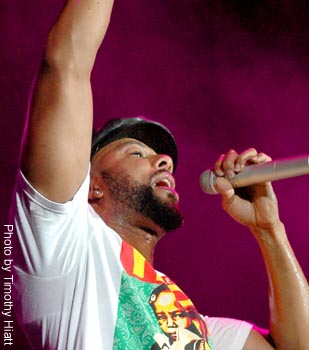
"Hunger in they eyes is what seems to feed me ... now I'm on the rise, doing business with my guys, visions realized, music affecting lives, a gift from the skies, to be recognized, I'm keeping my eyes on the people that's the prize"
- Common
"Hunger in they eyes is what seems to feed me ... now I'm on the rise, doing business with my guys, visions realized, music affecting lives, a gift from the skies, to be recognized, I'm keeping my eyes on the people that's the prize"
- Common
Hip Hop makes it's directorial debut, with life as it's subject
- Double Edge FilmsSunday, January 13, 2008
Hip-Politics [ volume 1.0 - Issue 1]
HIP-POLITICS. Or for those who can't quite digest the portmanteau, this blog is my perspective on the politics of hip-hop today. Many of you might dissect the concept of those two words intertwined and think thoughts like, 'race', 'sex', 'money', 'it's influence on youth', or 'it's influence on society'.
In fact I've just recently had a racy debate with a close relative to this extent. Her children attend Woodward Academy Primary School, (a private grade school in Georgia known for its famed Alumni and hefty tuition starting at $11,300.) and she boasts the fact that her children (who are both of African American decent) aren't into hip-hop or influenced by the culture. A culture she argues is a careless, violent and irresponsible causal factor in behavioral issues of the youth of Black America today.
The debate that sparked amongst a few of us that day, who have grown out of hip-hop centered around the question of whether as a parent should you allow your child to consume rap / hip-hop music which for the majority has gained a reputation as spreading mysogyny, violence, hate, materialism and sexually explicit messages through it's lyrics and images.
In short my answer was yes. I, a mother of a four year old, who's ears, mind, and soul are as imprint-able as silly putty, would and do allow my son to listen to many hip-hop artists of our day. Let me explain why in two points.
It was Abraham Lincoln, one of our founding fathers, a man who fought infamously for civil rights, who once said "A house divided against itself cannot stand". I look at the home that we share called America, and the idea of hip-hop that arose out of grassroots vision and creative expression from the very urban community that I grew from, and watch it cross mingle culturally to become one of the most influential art forms ever. I look at the powerful voice our youth now has managed to project, and look at the gaps it's filled in the pockets of an America that was once (and in some areas still is) for the most part divisible by two , black and white.
Consider the cultural iconography associated with hip-hop. Sex. Drugs. Money. Bling. If you were arguing the other side you could say that stereotypically these are big identifiers. You could also say: Record Scratching. Debating. Poetry. Beats. Rhythms, and Street Art are also good representation. Together this positive and negative imagery make up a form of entertainment that grosses billions of dollars each year. Without question, within this deep pool of revenue comes a great responsibility to those invested. Nevertheless, as a role of an educator, and nurturer I play to my son, I feel a stronger commitment to expose him to the reality of the ingenuities that line the fabric of his ethnology.
With respect to divides, I can't dismiss the idea that they do exist on some level throughout America despite my belief in the promise that hip-hop brings of a multicultural nation. Within the subculture itself there does exist a strong scent of separation, between the artists and the moneymakers. Therefore I would argue what the art form is lacking is balance. We've seen some hip-hop stars come from having nothing to something and eventually run out of sell-able material. It's the lack of balance that lends us to our vices, and ultimately to our miss trips delivery.
"I've learned that you can't have everything and do everything at the same time". - Oprah (O magazine, 2003)
(On an end note, this video aired on BET and caused a level of controversy behind it's lyrics, despite it's conscious message. VIEWER DISCRETION IS ADVISED.)
In fact I've just recently had a racy debate with a close relative to this extent. Her children attend Woodward Academy Primary School, (a private grade school in Georgia known for its famed Alumni and hefty tuition starting at $11,300.) and she boasts the fact that her children (who are both of African American decent) aren't into hip-hop or influenced by the culture. A culture she argues is a careless, violent and irresponsible causal factor in behavioral issues of the youth of Black America today.
The debate that sparked amongst a few of us that day, who have grown out of hip-hop centered around the question of whether as a parent should you allow your child to consume rap / hip-hop music which for the majority has gained a reputation as spreading mysogyny, violence, hate, materialism and sexually explicit messages through it's lyrics and images.
In short my answer was yes. I, a mother of a four year old, who's ears, mind, and soul are as imprint-able as silly putty, would and do allow my son to listen to many hip-hop artists of our day. Let me explain why in two points.
It was Abraham Lincoln, one of our founding fathers, a man who fought infamously for civil rights, who once said "A house divided against itself cannot stand". I look at the home that we share called America, and the idea of hip-hop that arose out of grassroots vision and creative expression from the very urban community that I grew from, and watch it cross mingle culturally to become one of the most influential art forms ever. I look at the powerful voice our youth now has managed to project, and look at the gaps it's filled in the pockets of an America that was once (and in some areas still is) for the most part divisible by two , black and white.
Consider the cultural iconography associated with hip-hop. Sex. Drugs. Money. Bling. If you were arguing the other side you could say that stereotypically these are big identifiers. You could also say: Record Scratching. Debating. Poetry. Beats. Rhythms, and Street Art are also good representation. Together this positive and negative imagery make up a form of entertainment that grosses billions of dollars each year. Without question, within this deep pool of revenue comes a great responsibility to those invested. Nevertheless, as a role of an educator, and nurturer I play to my son, I feel a stronger commitment to expose him to the reality of the ingenuities that line the fabric of his ethnology.
With respect to divides, I can't dismiss the idea that they do exist on some level throughout America despite my belief in the promise that hip-hop brings of a multicultural nation. Within the subculture itself there does exist a strong scent of separation, between the artists and the moneymakers. Therefore I would argue what the art form is lacking is balance. We've seen some hip-hop stars come from having nothing to something and eventually run out of sell-able material. It's the lack of balance that lends us to our vices, and ultimately to our miss trips delivery.
"I've learned that you can't have everything and do everything at the same time". - Oprah (O magazine, 2003)
(On an end note, this video aired on BET and caused a level of controversy behind it's lyrics, despite it's conscious message. VIEWER DISCRETION IS ADVISED.)
Subscribe to:
Posts (Atom)
