
Senator Barack Obama's campaign slogan goes: "A change that we can believe in". For every politician, change is like a loaded super soaker, being pumped and pumped then sprayed with a watered message as far as it can reach.
The late Tupac Amaru Shakur once spoke of change in a single released 1998.
"And still I see no changes. Can't a brother get a little peace?
There's war on the streets & the war in the Middle East. Instead of war on poverty, they got a war on drugs so the police can bother me."
Naseer Jones, poetic lyricist, spoke of the need for change in his recent well received single titled "Hip-Hop is dead".
"Everybody sound the same, commercialize the game
Reminiscin' when it wasn't all business
If it got where it started
So we all gather here for the dearly departed"
These influential figureheads say the word change (or make reference to it) and we stop, look and listen, inspired and empowered, because we believe that these men are forces for progress or movement.
But what does change mean for the status quo of hip-hop? Does it mean censorship of artists like 50 cent, Nelly or Lil Wayne? Does it mean stronger combat among artists on what constitutes true hip-hop, real lyricists vs fake thugs? Does it mean coercing rappers to acknowledge and act on their responsibility to youth.
What do we believe in where hip-hop is concerned? Do we believe in pure unadulterated story telling where tales of the streets, and 'the drug game' offer life and death accounts of the dark society we can relate to?
Do our convictions lie in the charismatic energy, sex, and harmony that hip-hop delivers? Or is it humility of spirit, integrity and heart that drive us?
Hip-hop is like a government, with divided wings of constituents that promote separate ideals for its conveyance. What's your vote gonna be?
-N
Monday, January 28, 2008

Sunday, January 20, 2008
The best of times, the worst of times [Volume 1.0 - Issue 2.0]

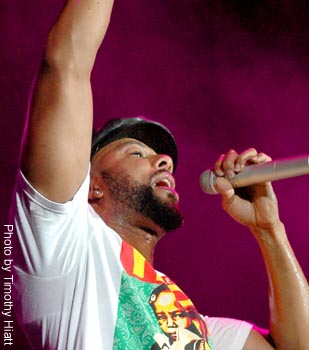
Nasir Jones seemingly prophetic message "Hip Hop is dead" may be shaping form yet, according to a number of media sources See 'Hip Hop's Down Beat'. It is believed the music industry is on a downward trend overall and hip-hop is sliding along a steep slope with the genre experiencing reportedly a one-third drop on it's sales in '07. Indie Record Labels are being scouted in bigger numbers, with some rappers even taking a groundswell approach (See 'The Shrinking Market Is Changing the Face of Hip-Hop'.), taking it to the people; reminiscent of the days when 'mixtapes' were the main channel for the hottest joints of the season. Media critics attribute this decline to critical listeners who point unforgiving fingers towards vulgarities, and violent content for the abandonment of revenue, while others name the flooding of formulaic sound, that has usual buyers overexposed and 'under-stimulated'. This puts the genre at the brink of a definitive direction, and at a position to take in some good with some bad. While hip-hop's exposure and popularity has reached the broadest height's of it's lifetime with something like 70% of it's buyers of the caucasion persuasion, it's persona is under intense scrutiny, that of which puts it at a cross roads, and has 'break masters', producer extraordinaries, or image weavers, deep diving through the sea of their imaginations.
Yesterday a friend told me I didn't appear, to her, to be a recognizable member of the hip-hop fanbase. "You don't strike me as a hip-hop fan" she said, and I began to ask her what she meant by it. Yet giving thought to her statement I realize my identification with hip-hop has changed through the years. Back then I wore, big boss jeans, bamboo earrings and thick 'x and o' link chains, and an attitude to match. As part and partaker of the culture, each of us know how the fashion, the music and the spirit are married. This concept was not introduced from hip-hop, but more a product of social dynamics, and cultural relationships.
So what do you tell your old friend, when you feel like they may have made a few wrong choices, are projecting themselves sometimes in a way you no longer agree with, or are going in an ill-advised direction? Does your commitment to the friendship waiver, with distancing on your part? Do you argue against them in the presence of others?
I find these questions relevant to the idea of how listeners will determine the path of hip-hop, their buying power, their perception of it's weaknesses, it's strengths and whether it stays true to it's origins or becomes a fusion of other artistries, like some other genres like punk rock, emo or rhythm and blues even, after the fall of the disco era. The beauty of it is that the music belongs to us, it was born from us, the people.
"Hunger in they eyes is what seems to feed me ... now I'm on the rise, doing business with my guys, visions realized, music affecting lives, a gift from the skies, to be recognized, I'm keeping my eyes on the people that's the prize"
- Common
"Hunger in they eyes is what seems to feed me ... now I'm on the rise, doing business with my guys, visions realized, music affecting lives, a gift from the skies, to be recognized, I'm keeping my eyes on the people that's the prize"
- Common
Hip Hop makes it's directorial debut, with life as it's subject
- Double Edge FilmsSunday, January 13, 2008
Hip-Politics [ volume 1.0 - Issue 1]
HIP-POLITICS. Or for those who can't quite digest the portmanteau, this blog is my perspective on the politics of hip-hop today. Many of you might dissect the concept of those two words intertwined and think thoughts like, 'race', 'sex', 'money', 'it's influence on youth', or 'it's influence on society'.
In fact I've just recently had a racy debate with a close relative to this extent. Her children attend Woodward Academy Primary School, (a private grade school in Georgia known for its famed Alumni and hefty tuition starting at $11,300.) and she boasts the fact that her children (who are both of African American decent) aren't into hip-hop or influenced by the culture. A culture she argues is a careless, violent and irresponsible causal factor in behavioral issues of the youth of Black America today.
The debate that sparked amongst a few of us that day, who have grown out of hip-hop centered around the question of whether as a parent should you allow your child to consume rap / hip-hop music which for the majority has gained a reputation as spreading mysogyny, violence, hate, materialism and sexually explicit messages through it's lyrics and images.
In short my answer was yes. I, a mother of a four year old, who's ears, mind, and soul are as imprint-able as silly putty, would and do allow my son to listen to many hip-hop artists of our day. Let me explain why in two points.
It was Abraham Lincoln, one of our founding fathers, a man who fought infamously for civil rights, who once said "A house divided against itself cannot stand". I look at the home that we share called America, and the idea of hip-hop that arose out of grassroots vision and creative expression from the very urban community that I grew from, and watch it cross mingle culturally to become one of the most influential art forms ever. I look at the powerful voice our youth now has managed to project, and look at the gaps it's filled in the pockets of an America that was once (and in some areas still is) for the most part divisible by two , black and white.
Consider the cultural iconography associated with hip-hop. Sex. Drugs. Money. Bling. If you were arguing the other side you could say that stereotypically these are big identifiers. You could also say: Record Scratching. Debating. Poetry. Beats. Rhythms, and Street Art are also good representation. Together this positive and negative imagery make up a form of entertainment that grosses billions of dollars each year. Without question, within this deep pool of revenue comes a great responsibility to those invested. Nevertheless, as a role of an educator, and nurturer I play to my son, I feel a stronger commitment to expose him to the reality of the ingenuities that line the fabric of his ethnology.
With respect to divides, I can't dismiss the idea that they do exist on some level throughout America despite my belief in the promise that hip-hop brings of a multicultural nation. Within the subculture itself there does exist a strong scent of separation, between the artists and the moneymakers. Therefore I would argue what the art form is lacking is balance. We've seen some hip-hop stars come from having nothing to something and eventually run out of sell-able material. It's the lack of balance that lends us to our vices, and ultimately to our miss trips delivery.
"I've learned that you can't have everything and do everything at the same time". - Oprah (O magazine, 2003)
(On an end note, this video aired on BET and caused a level of controversy behind it's lyrics, despite it's conscious message. VIEWER DISCRETION IS ADVISED.)
In fact I've just recently had a racy debate with a close relative to this extent. Her children attend Woodward Academy Primary School, (a private grade school in Georgia known for its famed Alumni and hefty tuition starting at $11,300.) and she boasts the fact that her children (who are both of African American decent) aren't into hip-hop or influenced by the culture. A culture she argues is a careless, violent and irresponsible causal factor in behavioral issues of the youth of Black America today.
The debate that sparked amongst a few of us that day, who have grown out of hip-hop centered around the question of whether as a parent should you allow your child to consume rap / hip-hop music which for the majority has gained a reputation as spreading mysogyny, violence, hate, materialism and sexually explicit messages through it's lyrics and images.
In short my answer was yes. I, a mother of a four year old, who's ears, mind, and soul are as imprint-able as silly putty, would and do allow my son to listen to many hip-hop artists of our day. Let me explain why in two points.
It was Abraham Lincoln, one of our founding fathers, a man who fought infamously for civil rights, who once said "A house divided against itself cannot stand". I look at the home that we share called America, and the idea of hip-hop that arose out of grassroots vision and creative expression from the very urban community that I grew from, and watch it cross mingle culturally to become one of the most influential art forms ever. I look at the powerful voice our youth now has managed to project, and look at the gaps it's filled in the pockets of an America that was once (and in some areas still is) for the most part divisible by two , black and white.
Consider the cultural iconography associated with hip-hop. Sex. Drugs. Money. Bling. If you were arguing the other side you could say that stereotypically these are big identifiers. You could also say: Record Scratching. Debating. Poetry. Beats. Rhythms, and Street Art are also good representation. Together this positive and negative imagery make up a form of entertainment that grosses billions of dollars each year. Without question, within this deep pool of revenue comes a great responsibility to those invested. Nevertheless, as a role of an educator, and nurturer I play to my son, I feel a stronger commitment to expose him to the reality of the ingenuities that line the fabric of his ethnology.
With respect to divides, I can't dismiss the idea that they do exist on some level throughout America despite my belief in the promise that hip-hop brings of a multicultural nation. Within the subculture itself there does exist a strong scent of separation, between the artists and the moneymakers. Therefore I would argue what the art form is lacking is balance. We've seen some hip-hop stars come from having nothing to something and eventually run out of sell-able material. It's the lack of balance that lends us to our vices, and ultimately to our miss trips delivery.
"I've learned that you can't have everything and do everything at the same time". - Oprah (O magazine, 2003)
(On an end note, this video aired on BET and caused a level of controversy behind it's lyrics, despite it's conscious message. VIEWER DISCRETION IS ADVISED.)
Subscribe to:
Posts (Atom)
